how the 2000 hansie cronje scandal broke cricket betting wide open
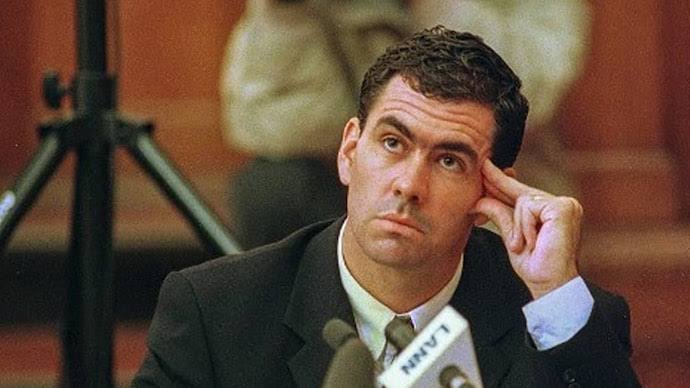
If we are talking about the absolute godfather of all cricket match fixing scandals, you literally cannot skip what happened in 2000 with Hansie Cronje, the captain of the South African national team. Before this, fans and insiders kind of whispered about underground betting syndicates, but this was the moment the entire sport lost its innocence on live television.
It is actually insane how the illegal betting ring was even discovered. The Delhi Police weren't investigating cricket at all. In early 2000, their anti extortion cell was secretly tapping the phone lines of some shady individuals to track a Dubai based extortion network. While listening to the tapes, the cops were thoroughly confused instead of extortion threats, they kept hearing animated discussions about runs and catches that were not supposed to be taken.
They realized they were listening to an Indian bookie named Sanjeev Chawla talking to someone with a distinct, chiseled foreign accent. One of the cops happened to be a huge cricket fan and recognized the voice from a post-match presentation. It was Hansie Cronje, a man considered a national hero in South Africa and the poster boy for cricketing integrity.
When the transcripts of the tapes leaked, the reality of illegal cricket betting was chilling. You had Chawla and Cronje negotiating exact scores like they were ordering fast food. Chawla would ask, How many runs for Gibbs? and Cronje would casually reply, Less than 20. They negotiated the money, with Cronje confirming that players like Herschelle Gibbs and Pieter Strydom wanted $25,000 each, asking Chawla for a $140,000 total to split with the team. They were literally plotting to score slowly and throw their wickets away so the bookies could make a fortune on the live betting markets.
When the Delhi Police dropped this bombshell in April 2000, the South African cricket board completely denied it. Cronje went on TV claiming the allegations were without substance. But a few days later, the guilt broke him. He confessed, admitting he had been taking thousands of dollars from bookies to manipulate games.
The King Commission and a Web of Global Corruption
The fallout was massive. The South African government launched a full blown judicial inquiry called the King Commission. The entire country stopped to watch their Captain America sit on international television and admit how his obsession with money had completely corrupted him. He revealed that another famous cricketer, former Indian captain Mohammad Azharuddin, had actually introduced him to his first bookie, Mukesh Gupta, back in 1996. It proved that this massive web of illegal sports gambling had infiltrated the highest levels of the game across multiple countries.
The wildest testimony came from Herschelle Gibbs. The talented young batsman took the stand and admitted Cronje offered him $15,000 to score less than 20 runs during a one-day match against India in Nagpur, while bowler Henry Williams was offered $15,000 to concede over 50 runs. The way it played out on the field, however, was a complete disaster for the bookies. Gibbs went out to bat, completely forgot about the bribe because he was in the zone, and smashed 74 runs off just 53 balls. Williams injured his shoulder and couldnt even finish his second over. Neither received the money because they completely failed at failing.
Cronje was slapped with a lifetime ban from all cricket. But the most tragic part of the story happened two years later. In June 2002, Cronje was the sole passenger on a cargo plane that slammed into the Outeniqua Mountains in terrible weather. He died instantly. When investigators dug into his finances posthumously, they reportedly discovered more than 70 secret, undeclared bank accounts in the Cayman Islands. It implied the underground match fixing money ran much deeper than he ever admitted.
To this day conspiracy theories float around that the plane crash wasn't an accident that massive betting syndicates had him silenced. As for Sanjeev Chawla, he fled to the UK immediately in 2000. It took the Delhi Police 13 years to file the official chargesheet and 20 years of international legal battles before Chawla was finally extradited to New Delhi in February 2020.
The Tehelka Tapes
If the Cronje scandal was the earthquake that shook world cricket, what happened in India immediately after was a tsunami that destroyed everyone's childhood heroes. It started with former Indian all-rounder Manoj Prabhakar, who decided to play the ultimate whistleblower. Teaming up with the investigative magazine Tehelka, he strapped a secret pinhole camera to his bag and covertly filmed his ex teammates, coaches, and top BCCI officials. The resulting Tehelka tapes were an absolute nuke dropped on Indian sports.
In the hidden camera footage, BCCI officials privately admitted that matchfixing was completely rife. But the most earth-shattering accusation was aimed at the god of Indian cricket - Kapil Dev. Prabhakar claimed that during the 1994 Singer Cup, Kapil Dev walked into his hotel room and offered him 25 lakh rupees to deliberately throw a match against Pakistan.
The accusation led to one of the most haunting moments in Indian television history. In May 2000, Kapil Dev sat down with notoriously ruthless journalist Karan Thapar on BBC Hardtalk. Expecting a gentle interview to clear his name, Kapil was instead hammered with ice cold questions about taking bribes. The pressure broke him. Right there on national television, the legendary Kapil Dev burst into tears, sobbing uncontrollably and crying out that he would rather commit suicide than sell his country. For millions of fans, seeing their ultimate hero weeping like a child signaled that the innocence of the game was officially dead.
The CBI Report and the Evolution of Cricket Betting
The government stepped in, and the Central Bureau of Investigation launched a sprawling probe into the cricket betting syndicates. After months of investigation, the CBI released a 340 page report.
In a wild plot twist, they completely exonerated Kapil Dev, finding zero evidence he ever offered Prabhakar money. Kapil was cleared, though he was so traumatized he walked away from the game for a long time. However, the whistleblower himself didnt escape. The cbi discovered that Manoj Prabhakar was actually heavily involved with the bookies the entire time. The BCCI slapped him with a five-year ban, proving the underground betting world in the 90s was so toxic you couldnt trust anyone on the pitch.
The massive CBI report dropped in November 2000, explicitly accusing Mohammad Azharuddin, Ajay Jadeja, Manoj Prabhakar, Ajay Sharma, and Nayan Mongia of having deep ties to bookmakers. Following a brutal five-hour interrogation where he allegedly drank 26 glasses of water out of sheer stress, Azharuddin reportedly confessed to taking money from punters and fielding calls from Dubai underworld dons. The BCCI handed Azharuddin and Sharma lifetime bans, while Jadeja and Prabhakar received five-year suspensions.
Yet, because match fixing was not defined as a specific criminal offense under Indian law in 2000, the CBI couldnt legally register a police FIR for cheating. It turned into a decade-long legal mess. By the time the Andhra Pradesh High Court struck down Azharuddin's life ban in 2012 due to procedural flaws, his career was already over.
The true legacy of the 2000 match fixing scandal is that it permanently changed sports governance. The ICC realized they were completely unprotected and immediately formed the Anti Corruption Unit (ACU). This is why today's players have their phones confiscated before entering a dressing room, with corruption officers constantly monitoring hotels and dugouts.
Back in 2000, match fixing required a guy with a briefcase of cash calling a hotel landline from a London pub. Today, illegal sports gambling has moved to frictionless offshore crypto casinos and deep fake YouTube streams. The technology has completely changed, but the exact same greed that brought down Hansie Cronje and the 90s legends is still running the show.